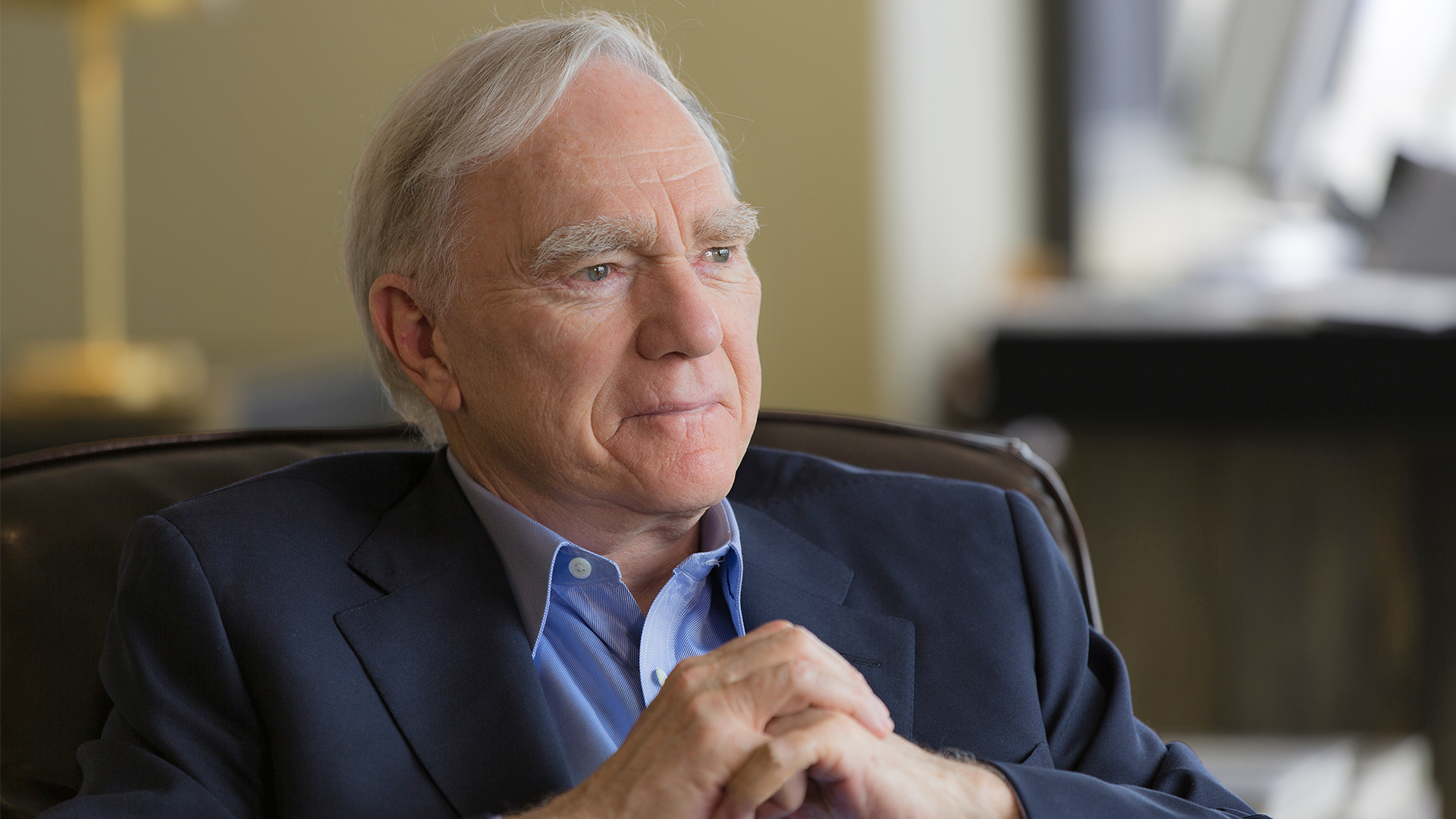

Robert McKee, a Fulbright Scholar, is among the most widely known screenwriting lecturers. He teaches an enjoyable and information packed 4-day, 32-hour intensive class to sold-out audiences around the world. McKee’s former students include 59 Academy Award winners, 214+ Academy Award Nominations, 170 Emmy Award winners, 500+ Emmy Award nominations, 30 WGA (Writers Guild of America) Award winners, 180+ WGA Award nominations, and 26 DGA (Directors Guild of America) Award winners, 52+ DGA Award nominations, (all participated in McKee’s course before or after winning their award; not all were awarded for writing).

He was profiled by Bob Simon of 60 Minutes for CBS news, and CNN recently did a profile and review of McKee and the Story Seminar. Since 1984, more than 100,000 students have taken McKee’s course, at various cities around the world: Los Angeles, New York, London, Paris, Sydney, Toronto, Boston, Las Vegas, San Francisco, Helsinki, Oslo, Munich, Tel Aviv, Auckland, Singapore, Barcelona, Stockholm, São Paulo, Colombia, Beijing, Rio de Janeiro, Moscow, and many more. The notable writers and actors such as Geoffrey Rush, Paul Haggis, Akiva Goldsman, William Goldman, Joan Rivers, Meg Ryan, Rob Row, David Bowie, Kirk Douglas, John Cleese, Steve Pressfield, among many others have taken his seminar.

Famed New Zealand movie director, Peter Jackson is a graduate of the McKee seminar. In 1990, Robert McKee was brought to New Zealand by the NZ Film Commission, and delivered his famous 3 Day seminar on screenplay & story structure in Auckland and Wellington. In the audience were Peter Jackson & Jane Campion. The seminar had a major influence on Jackson, who went on to make Heavenly Creatures, The Lord Of The Rings trilogy, and King Kong.

McKee continues to be a project consultant to major film and television production companies such as 20th Century Fox, Disney, Paramount, MTV, as well as to major software firms (Microsoft, etc.), NASA, and television news departments. In addition, several companies such as ABC, Disney, Miramax, PBS, Nickelodeon and Paramount regularly send their entire creative and writing staffs to his lectures.

In 2000, McKee won the International Moving Image Book Award for his book Story (Regan Books/HyperCollins). The book, currently in its 19th printing in the United States and its 14th printing in the UK, has become required reading for film and cinema schools at Harvard, Yale, UCLA, USC and Tulane universities. The book was on the Los Angeles Times best-seller list for 20 weeks. It is translated into over 20 languages.

McKee is often quoted as saying that Casablanca (1942) is the greatest screenplay of all time. Several critics tackle this by saying that Casablanca actually had no tight script, or hardly any script that was taken in a serious account by the director. A line in the IMDb trivia article on Casablanca states:

“No one knew right up until the filming of the last scene whether Ilsa would end up with Rick or Laszlo. During the course of the picture, when Ingrid Bergman asked director Michael Curtiz with which man her character was in love, she was told to “play it in between”. Since the ending was not the final scene shot, there are some scenes where she *was* aware of how everything would turn out, and these include the scene in the black market with Rick and the scene in the Blue Parrot where Ferrari offers the Laszlos one exit visa.”

In response, McKee claims that Ingrid Bergman had misunderstood the situation: the ending was known, but was kept secret from her until the last possible minute.

McKee’s credits include writing and presenting the BBC series Filmworks, the Channel Four series ‘Reel Secrets’, the BAFTA Award-winning J’accuse Citizen Kane television program which he wrote and presented, and the writing of Abraham, the four-hour mini-series on Turner Network Television (TNT) which starred Richard Harris, Barbara Hershey and Maximilian Schell.

In the Charlie Kaufman-penned film Adaptation, McKee’s character was portrayed by the Emmy Award-winning actor Brian Cox, who was McKee’s personal choice for the role. In the movie, the desperate screenwriter Charlie Kaufman (played by Nicolas Cage) reluctantly goes to McKee’s course, but then – after being “shaken” by McKee’s tough-style response to his claim that “nothing happens in the real world” – Kaufman asks McKee to meet in person to discuss his failure to write the film adaptation he is working on.

Though the story depicts McKee as little more than an amalgam of hack cliches on the subject of screen writing, Charlie’s slacker brother Donald uses the knowledge obtained attending the famous seminar to write a spec script he then sells for a large amount of money through his brother’s agent. The film then concludes rather cynically with the very hackneyed, bang-up ending McKee is ridiculed for recommending, as well as a voice-over epilogue in which—by means of voice-over narration—Cage’s Kaufman character admonishes himself for disobeying a cardinal rule of McKee’s to avoid voice-over narration.

At the age of 9, Robert McKee played the title role in a community theater production of ‘Martin the Shoemaker’. He continued acting as a teenager in theater productions in his hometown of Detroit, Michigan. Upon receiving the Evans scholarship, he attended the University of Michigan and earned a Bachelor’s degree in English Literature. While an undergraduate, he acted in and directed over thirty productions. McKee’s creative writing professor was the noted Kenneth Thorpe Rowe.

After completing his Bachelor of Arts degree, McKee toured with the APA (Association of Producing Artists) Repertory Company, appearing on Broadway alongside Helen Hayes, Rosemary Harris and Will Geer. He then received the Professional Theater Fellowship and returned to Ann Arbor, Michigan to earn his Master’s degree in Theater Arts.

Upon graduating, McKee directed the Toledo Repertory Company, acted with the American Drama Festival, and became Artistic Director of the Aaron Deroy Theater. From there he traveled to London to accept the position of Artist-in-Residence at the National Theatre where he studied Shakespearean production at the Old Vic theatre. He then returned to New York and spent the next seven years as an actor/director in Broadway.

After deciding to move his career to film, McKee attended Cinema School at the University of Michigan. While there, he directed two short films: A Day Off, which he also wrote, and Talk To Me Like The Rain, adapted from a one-act play by Tennessee Williams. These two films won the Cine Eagle Award, awards at the Brussels and Grenoble Film Festivals, and various prizes at the Delta, Rochester, Chicago and Baltimore Film Festivals.

In 1979, McKee moved to Los Angeles, where he began to write screenplays and work as a story analyst for United Artists and NBC. He sold his first screenplay Dead Files to AVCO/Embassy Films, after which he joined the WGA (Writers Guild of America). His next screenplay, Hard Knocks, won the National Screenwriting Contest, and since then McKee has had eight feature film screenplays purchased or optioned, including the feature film script Trophy for Warner Bros. (the film, however, was not produced). In addition to his screenplays, McKee has had a number of scripts produced for television series such as Quincy, M.E. (starring Jack Klugman), Columbo (starring Peter Falk), Spenser: for Hire and Kojak (starring Telly Savalas).

In 1983, McKee joined the faculty of the School of Cinema-Television at the University of Southern California (USC), where he began offering his famous STORY Seminar class. A year later, McKee opened the course to the public and is still teaching and inspiring all around the world.


Robert McKee

Robert McKee’s Story Seminar Graduate Credits: Actors, Directors, Producers and Writers

Structure is Character

Characters are what they do. Story events impact the characters, and the characters impact events. Actions and reactions create revelation and insight, opening the door to a meaningful emotional experience for the audience.

Story is what elevates a movie, transforming a good film into a great one. Movie-making is a collaborative endeavor — requiring great skill and talent by the entire cast, crew, and creative team — but the screenwriter is the only original artist on a film.

Everyone else — the actors, directors, cameramen, production designers, editors, special effects wizards, and so on — are interpretive artists, trying to bring alive the world, the events, and the characters that the screenwriter has invented and created.

Robert McKee’s Story Seminar is a comprehensive, superbly organized exploration of all elements, from the basics to advanced concepts. It is a practical course, presenting new perspectives on the craft of storytelling, not just for the screenwriter but for the novelist, playwright, journalist, and non-fiction writers of all types.